Mindful Tourism for Mental Wellness
Soft Travel: The Gentle Approach to Meaningful Tourism
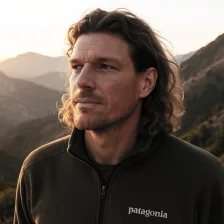
By Steven Keen
MSc candidate in Responsible Tourism Management, GSTC- and ICRT-certified.
14 min read Updated: Verified:
A way of traveling that puts the traveler’s inner experience first—mental wellness, spontaneity, and gentle pacing over packed itineraries and achievement-oriented tourism.
Key Takeaways
- Soft travel is defined by the traveler’s inner state, not the destination—gentle pacing, spontaneity, and psychological recovery over packed, achievement-driven itineraries.
- It answers a different question from sustainable travel: what the trip does to the traveler while it lasts, rather than what it does to the place.
- The term inherits a fifty-year German lineage—sanfter Tourismus, first recorded in 1977.
- It is usually the cheaper option, not the dearer one: fewer bases, longer stays, shoulder seasons, walking over scheduled excursions.
- Its restoration fades within weeks by design—that is what restoration is. Durable change afterward is a different subject.
Soft Travel at a Glance
Soft travel puts the traveler’s inner experience first—mental wellness, spontaneity, and gentle, unhurried activity—rather than packed itineraries and achievement-oriented sightseeing. Where most travel philosophies begin with the destination or its people, this one begins with the state the traveler arrives in. This page is the orientation; the definition proper is set out separately.
The idea has serious ancestry: it descends from the German concept of Sanfter Tourismus (“gentle tourism”), coined in the late 1970s as a critique of industrial mass tourism. Soft travel keeps that tradition’s suspicion of the packaged and the rushed, but shifts the emphasis from the destination’s ecology to the traveler’s psychology. Where responsible tourism asks what a trip does to a place, soft travel asks what a trip does to the person taking it. In practice, it centers on four commitments:
Mental Wellness First
Travel as a tool for psychological recovery, not another item on the to-do list.
Flexible Spontaneity
Space for unplanned moments and intuitive decisions—following interest, not an itinerary.
Gentle Activities
Unforced experiences without physical extremes—shore walks, forest time, aimless wandering.
Stress Reduction
Deliberate avoidance of crowded attractions and dense schedules—travel at the body’s pace.
For the full definition, the term’s fifty-year history, and what soft travel is not (it is often confused with soft adventure tourism), see What Is Soft Travel? Definition, Origins & Meaning.
The Historical Roots: From “Sanfter Tourismus” to Soft Travel
The idea of gentle travel has documented roots in German-language tourism criticism. The Swiss planner Fred Baumgartner first used the term sanfter Tourismus in a 1977 essay in the Neue Zürcher Zeitung,1 and the futurist Robert Jungk made it famous in 1980 with a GEO magazine essay whose title asked, pointedly, “How many tourists per hectare of beach?”2 Jungk set “hard travel” against “gentle travel” in a comparison that has been quoted ever since: mass against tact, speed against patience, sights against encounters. Jost Krippendorf’s 1984 book Die Ferienmenschen gave the critique its scholarly foundation, arguing that leisure travel should serve the traveler’s development rather than reproduce the exhaustion it promises to cure.3
That first wave was primarily ecological—small groups, intact landscapes, self-determined travel. Its environmental agenda was later absorbed into what is now called sustainable tourism. Soft travel is the strand that survived on the other side of the ledger: the psychological and emotional dimension Krippendorf insisted on. In an era of digital overstimulation and professional exhaustion, that strand has found a second life.
Distilled From Jungk’s Hard/Gentle Juxtaposition (1980)2
- Ecological compatibility with destination environments
- Autonomous, self-determined travel decisions
- Respect for local ecosystems and communities
- Small group sizes and individual encounters
The full lineage—from the 1977 coinage through Jungk and Krippendorf to today’s revival—is traced in the definition page.
Soft Travel vs. Slow Travel vs. Sustainable Tourism
These three concepts are not mutually exclusive. A single trip can draw on all three—the table shows where each one puts its emphasis, as this site uses the terms.
| Feature | Soft Travel | Slow Travel | Sustainable Tourism |
|---|---|---|---|
| Primary Focus | Mental well-being, stress reduction | Cultural immersion, authenticity | Ecological & social responsibility |
| Time Frame | Flexible, no minimum | Longer stays (weeks/months) | Variable duration |
| Activity Level | Gentle, accessible, relaxed | Variable, often intensive | All activity levels |
| Planning | Minimal, spontaneous, intuitive | Thoughtful but flexible | Structured with sustainability criteria |
| Main Motivation | Self-discovery, mental recovery | Cultural understanding | Positive impact, resource preservation |
| Transportation | Any mode, primarily comfortable | Preferably slow (train, bicycle) | Low-carbon, eco-friendly |
| Typical Traveler | Burnout-prone, digital detox seekers | Culture enthusiasts, long-term travelers | Environmentally conscious consumers |
Soft Travel
Creates the mental space and emotional readiness
Slow Travel
Enables deep cultural connections
Ensures positive impacts on destinations
Embed this graphic
Free to embed. The embed keeps a visible credit linking back to this page.
to Be Tourists
THE FIELD GUIDE · FREE · NO EMAIL
Soft Is a Method, Not a Mood
You can’t book a slower trip—you can only choose one. Eleven evidence-based pages that turn soft travel into something you do before you arrive, not something you hope for once you’re there. From our companion site on responsible tourism.
Get the free guideThe Psychology of Soft Travel: What the Evidence Says
Soft travel’s core intuition—that unhurried time in restorative environments does measurable good—is one of the better-evidenced ideas in environmental psychology. The founding result is Roger Ulrich’s 1984 study in Science: surgical patients whose window faced trees recovered faster and needed less pain medication than matched patients facing a brick wall.4 A decade later, Stephen Kaplan’s attention restoration theory explained why: natural environments hold attention effortlessly—Kaplan’s term is, fittingly, “soft fascination”—which lets the depleted capacity for directed attention recover.5
The dose-response research is newer and concrete:
20–30 min
The efficient nature dose
In a field study using salivary biomarkers, a nature experience lowered cortisol at about 21% per hour, with the greatest efficiency in sessions of 20 to 30 minutes.6
120 min
The weekly threshold
In a sample of nearly 20,000 people in England, those who spent at least two hours a week in nature were significantly more likely to report good health and high well-being—whether in one visit or several.7
24 forests
Shinrin-yoku, measured
Japanese field experiments across 24 forests found that “forest bathing” lowered cortisol, pulse rate, and blood pressure relative to city environments.8
What the evidence does not say
Honesty requires the boundary: no study has tested “soft travel” as a package. The research above concerns nature exposure, attention, and stress—the mechanisms soft travel builds on—not the label itself. And vacation research adds a humbling result: the well-being gains of a vacation, real as they are, typically fade within weeks of returning to work.9 A 2023 meta-analysis confirms both halves—vacations genuinely restore, and the effect fades.10
Soft travel’s honest conclusion from that literature is not “book a gentler vacation and be cured.” It is that how one travels shapes how much recovery a trip delivers—and that chasing an itinerary is the pattern most likely to deliver none. Soft travel is not therapy, treats no condition, and substitutes for no care a reader may need. If a reader is unwell, the relevant expert is a clinician, not an itinerary—the full scope note is on the evidence page.
The Tyranny of the Optimized Trip
Modern travelers operate under quiet but constant pressure: FOMO (the fear of missing a “must-see”), social-media performance (the compulsion to produce postable moments), and the productivity mindset (vacation as a project with measurable outcomes). The result is a vacation that reproduces the exact exhaustion it was meant to relieve—the pattern Krippendorf described in 1984.3
Soft travel breaks these patterns by deliberately accepting what the optimized trip forbids: unplanned hours, “unproductive” days, repetition (the same café twice), and missed attractions.
Mindfulness and Presence in Travel
Sensory Presence
Attention on immediate perception—the sound of a marketplace, the smell of bread, sunlight on skin.
Temporal Presence
Living in the hour at hand instead of anticipating the next scheduled activity.
Social Presence
Actual encounters instead of photo interactions—locals as hosts and neighbors, not props.
Soft Travel in Practice: Concrete Implementation
The Art of Not Planning
Phase 1: A Framework Instead of a Plan
Define minimal parameters and stop there:
- Arrival point and an approximate departure
- A budget frame
- Basic preferences (coast or mountains, town or countryside)
- Two or three “anchor experiences” as loose orientation points
Phase 2: On-Site Intuition
- The 3-Meter Rule: walk out of the accommodation in any direction and follow the first thing that genuinely interests you
- Local recommendations: don’t ask for a “top 10”—ask people for their own favorite places
- Timing flexibility: stay longer where it feels right, even if nothing was “planned” there
- Weather responsiveness: adapt the day to meteorological and emotional conditions alike
Soft Travel Activities by Destination Type
Coastal Regions
Crete, Portugal, Sicily
- Waking with the light, not an alarm
- Slow breakfasts with local products
- Barefoot beach walks
- Swimming without performance thoughts
- Aimless wandering along coastal paths
- Watercolor painting or journaling
Mountain Regions
Alps, Crete Inland, Pyrenees
- Short panorama walks without summit pressure
- Unhurried hours in the forest
- Wild-herb walks with a local guide
- Visits to traditional producers
- Wine tastings at family estates
- Dinner at farm restaurants
Cultural Towns
Lisbon, Granada, Chania
- Getting deliberately lost in old quarters
- A multi-hour café stay as the day’s “activity”
- A museum visit that skips most of the museum
- People-watching on central squares
- Respecting the siesta as a rhythm, not an obstacle
- Joining the evening stroll—paseo, passeggiata, volta
Soft Travel Accommodations: What to Look For
The accommodation can make or break a soft trip, because it is where the unplanned hours actually happen. Five criteria matter more than star ratings:
- 1
Spatial Quality Over Quantity
A room with a view worth sitting with beats ten amenities
- 2
Acoustic Quiet
Distance from traffic noise; a natural soundscape
- 3
Flexibility
Relaxed check-out habits; spontaneous extensions possible
- 4
Company and Retreat, Both
Shared spaces for sociable evenings and corners for solitary ones
- 5
Local Integration
Family-run houses instead of international chains
Accommodation Types That Fit
Small guesthouses with personal character
Family-run pensions and B&Bs
Agriturismo and farm stays
Quiet eco-lodges
Renovated traditional houses
Portuguese quintas, Greek stone houses
Soft Travel, Recovery, and the Case for Doing Nothing
Against the Vacation as Performance
Modern work culture tends to conceptualize vacation as a performance event—maximum experiential “return on investment” per day off. That logic quietly reproduces the exhaustion machinery people are trying to escape, and the vacation literature suggests the gains of even a good vacation are short-lived once the old rhythm resumes.9 The soft response is not a better schedule; it is a different stance:
Legitimizing Doing Nothing
In a productivity-obsessed culture, choosing to do nothing—visibly, unapologetically—is a form of self-respect.
A Break from Self-Optimization
No fitness challenges, no educational goals, no personal-development agenda. Simply being somewhere.
Temporal Decompression
The shift from work mode to genuine rest takes days, not hours. Soft travel leaves that transition alone instead of overwriting it with activities.
Digital Detox: Three Levels
Level 1
Gentle Withdrawal
- Check the phone twice a day, no more
- Delete social media apps for the trip
- Airplane mode as the default
Level 2
Substantial Separation
- Leave the phone at the accommodation
- An analog camera for memories
- A paper notebook for thoughts
Level 3
Complete Disconnection
- Entirely device-free
- Postcards for communication
- Time by sun and appetite
Solitude vs. Loneliness: Soft Travel Alone
Soft travel suits solo travelers who want time with themselves on purpose. It cultivates positive solitude: self-reflection without judgment, creative time without an audience, long thoughts in unhurried places.
Social connection stays optional—open to the spontaneous encounter, never forcing one. Quality over quantity in interactions, and no apology for days spent alone.
Soft Travel Destinations: Where Gentle Tourism Succeeds
Not every place suits soft travel equally. The destinations that do share a profile: natural deceleration, simple infrastructure, sensory richness, cultural calm, light tourist load, and a forgiving climate.
Europe: Regions That Fit the Profile
Greek Islands—Beyond the Postcards
Crete, Naxos, Amorgos
Quiet bays, working mountain villages, a long mild season, and a hospitality culture with its own name—philoxenia. Naxos keeps untouched highland villages; Amorgos pairs dramatic landscape with monastic calm. Crete gets its own field guide on this site.
Iberian Peninsula—Forgotten Corners
Alentejo, Inland Andalusia, Galicia
Cork and olive country, medieval towns without lines, thermal springs, the white villages of the Sierra de Grazalema, and Galicia’s mystical Atlantic weather.
Alpine Retreats—Mountains Without Adrenaline
South Tyrol, Swiss Alpstein, French Écrins
Old valley traditions, gentle high paths, simple mountain inns, and cheese dairies where nothing has been in a hurry for generations.
Portugal—Alentejo & Costa Vicentina
Medieval towns, Atlantic coast
Évora, Monsaraz, and Marvão at walking pace; wineries with rooms; the dramatic, undeveloped cliffs of the Costa Vicentina for slow coastal wandering.
Soft Travel and Crete: The Natural Match
Crete has everything the destination profile asks for: geographic range from calm sandy bays to high mountain quiet, one of Europe’s longest warm seasons, and—above all—a culture that treats unhurried time as a virtue rather than a failure. Four Cretan concepts do a lot of the work:
Philoxenia (Φιλοξενία)
Literally “friendship to the stranger”—the tradition of treating guests as friends. It creates the trust in which unplanned encounters happen.
Kefi
Joy that arrives unscheduled—spontaneity and improvisation as cultural norms, perfectly aligned with travel that leaves room for them.
Paréa Culture
Company without a clock—hours around a table of raki and mezze. No agenda, no rush, just being together.
Siga-Siga Tempo
“Slowly, slowly” as an accepted rhythm of life. On Crete, taking your time is not laziness—it is competence.
The practical side—which coasts and villages, which seasons, how to base yourself, what a gentle two-week stay costs, and where the crowds are so you can be elsewhere—lives in the dedicated guide, written from the island itself.
The Future of Soft Travel: Trends & Open Questions
Growing Acceptance
The post-pandemic years taught a generation what deceleration feels like, and rising mental-health awareness has normalized travel that serves it. The wellness-tourism market grew 13.8% between 2023 and 2024 and is forecast to exceed $1 trillion by 2029, per the Global Wellness Institute.11 Younger travelers increasingly weigh well-being over accumulation—of possessions or of sights.
Industry Reactions
Hospitality now sells “disconnect to reconnect” packages; operators build gentler programs; destinations have begun marketing quiet itself. Some of this is genuine. Some of it is the optimized trip wearing a linen shirt.
The Questions Worth Asking
- Will soft travel be commercialized into one more purchasable “experience”?
- Can an aesthetic of slowness on social media coexist with the practice of it?
- How do quiet places stay quiet once they are recommended for being quiet?
That last question is not rhetorical—it is the overtourism problem, and it belongs to responsible tourism as much as to this site.
Soft Travel as a Path to More Quality of Life
Soft travel is more than a travel style. It is an invitation to renegotiate one’s relationship with time, productivity, and self-worth—and a vacation is simply the most forgiving place to start. Its convictions fit in five lines:
Mental well-being over quantifiable experiences
Spontaneity as a quality, not a planning failure
Slowness as access to depth, not inefficiency
Simplicity as enrichment, not lack
Presence as the actual destination
Soft travel is not an escape from life, but a way back to it.
How Soft Travel Connects to Responsible, Ethical & Inclusive Tourism
Soft travel answers one question—what travel does to the traveler. The adjacent questions have their own reference resources, by the same author, and the connections are not decorative:
Responsible Tourism
Longer stays in fewer places, mindful spending that reaches small local businesses, off-peak timing that spares the hotspots—what those choices do for the place is the sister sites’ ledger; this site only notes how naturally softness produces them.
Ethical Tourism
Time is an ethical resource: unhurried travelers can notice, ask, and choose—the conditions under which ethical decisions actually get made.
Inclusive Tourism
Gentle pacing and flexible plans accommodate a wide range of bodies and needs by default—and mental accessibility deserves the same attention as physical access. The access needs a step-free ramp still misses—pacing a trip around an energy-limiting condition among them—are mapped in access beyond the ramp.
Letters from inside the question
The Other Side of Travel
The tourism industry is loud, crowded, and always trying to sell you something. These letters are the drive into the hills. A monthly dispatch exploring how to travel differently.
Read it before you decideSoft Travel in Practice: Case Studies
The gentle, unhurried register this site describes isn’t a mood—each page is stress-tested against a real institution that engineers it: a car-free Alpine cooperative, a national nature-prescription program, a century-old car-free island, and one disclosed operator on Crete. Here is a look at all four case studies, and where to read each in full.
- , read the case study
What Is Soft Travel?
Alpine Pearls
A cross-border cooperative of Alpine villages that makes a car-free “mobility guarantee” a binding condition of membership—founded in 2006 with 17 “Pearls.”
- , read the case study
The Evidence
PaRx: A Prescription for Nature
Canada’s national nature-prescription program that lets clinicians formally prescribe the exact dose this page documents—at least two hours of nature a week.
- , read the case study
The Alpine Model
Mackinac Island State Park Commission
The Michigan state-park authority that has kept private cars off Mackinac Island for more than 125 years—banned in 1898 and still enforced today.
- , read the case study
Soft Travel on Crete
CRETAN®
The disclosed working model this guide’s author founded—a Crete operator that moves groups of eight on foot through the quiet inland resorts never reach.
Frequently Asked Questions
What is the difference between soft travel and sustainable travel?
Is soft travel more expensive?
Who is soft travel for?
What is the best destination for soft travel?
Steven spent a decade making documentaries in the places tourism forgets—with his work held in the archives of the UN’s International Labour Organization—before he went to live in one: a tiny mountain village on Crete. He is completing an MSc in Responsible Tourism Management, GSTC- & ICRT-certified, and the founder of CRETAN®, which serves as a case study. Read how these pages are edited.
Where to Go from Here
What Is Soft Travel?
The full definition page: the German origins, the recovery evidence in depth, six practices, and what soft travel is not.
Soft Travel on Crete: A Field Guide
Everything above, applied to one island: gentle seasons, four bases, the ferry as decompression, and a seven-day rhythm.
The Evidence for Soft Travel
Every claim on this site traced back to its studies—what the science supports, and the fade-out it does not hide.
Explore Our Companion Resources
- transformationaltourism.com If you want the restoration this page describes to outlast the return flight, here is how state becomes trait. (opens in new tab)
- regenerativetravel.org The same unhurried mindset read from the place’s side: why softness is regeneration’s prerequisite, plus the hub-and-spoke model. (opens in new tab)
- responsibletourism.com The ledger this page’s closing section defers to: what your travel does to places, with evidence-based guides and global frameworks. (opens in new tab)
References
- Tourismus in der Dritten Welt – Beitrag zur Entwicklung? — Baumgartner, F. Neue Zürcher Zeitung, September 16, 1977 (print). [German] The first recorded use of “sanfter Tourismus.” ↩
- Wieviel Touristen pro Hektar Strand? Plädoyer für sanftes Reisen — Jungk, R. GEO 10/1980, pp. 154-156 (print). [German] The essay that made gentle tourism a public idea. ↩
- Die Ferienmenschen (English edition: The Holiday Makers, Heinemann, 1987) — Krippendorf, J. Orell Füssli, 1984. https://archive.org/details/holidaymakersund0000krip (accessed August 5, 2026). ↩
- View Through a Window May Influence Recovery from Surgery — Ulrich, R. S. Science 224(4647), 1984, pp. 420-421. https://www.science.org/doi/10.1126/science.6143402 (accessed August 5, 2026). ↩
- The restorative benefits of nature: Toward an integrative framework — Kaplan, S. Journal of Environmental Psychology 15(3), 1995, pp. 169-182. https://doi.org/10.1016/0272-4944(95)90001-2 (accessed August 5, 2026). ↩
- Urban Nature Experiences Reduce Stress in the Context of Daily Life Based on Salivary Biomarkers — Hunter, M. R., Gillespie, B. W. & Chen, S. Y.-P. Frontiers in Psychology 10:722, 2019. https://www.frontiersin.org/journals/psychology/articles/10.3389/fpsyg.2019.00722/full (accessed August 5, 2026). ↩
- Spending at least 120 minutes a week in nature is associated with good health and wellbeing — White, M. P. et al. Scientific Reports 9:7730, 2019. https://www.nature.com/articles/s41598-019-44097-3 (accessed August 5, 2026). ↩
- The physiological effects of Shinrin-yoku (taking in the forest atmosphere or forest bathing): evidence from field experiments in 24 forests across Japan — Park, B. J. et al. Environmental Health and Preventive Medicine 15, 2010, pp. 18-26. https://doi.org/10.1007/s12199-009-0086-9 (accessed August 5, 2026). ↩
- Do We Recover from Vacation? Meta-analysis of Vacation Effects on Health and Well-being — de Bloom, J. et al. Journal of Occupational Health 51(1), 2009, pp. 13-25. https://onlinelibrary.wiley.com/doi/10.1539/joh.K8004 (accessed August 5, 2026). ↩
- We Continue to Recover Through Vacation! Meta-Analysis of Vacation Effects on Well-Being and Its Fade-Out — Speth, F., Wendsche, J. & Wegge, J., European Psychologist 28(4), 2023. https://econtent.hogrefe.com/doi/10.1027/1016-9040/a000518 (accessed August 5, 2026). ↩
- The Global Wellness Economy Hits a Record $6.8 Trillion and Is Forecast to Reach $9.8 Trillion by 2029 — Global Wellness Institute, Global Wellness Economy Monitor 2025, press release, November 19, 2025. https://globalwellnessinstitute.org/press-room/press-releases/the-global-wellness-economy-hits-a-record-6-8-trillion-and-is-forecast-to-reach-9-8-trillion-by-2029/ (accessed August 5, 2026). ↩
Further Reading
- View Through a Window May Influence Recovery from Surgery
Roger S. Ulrich · 1984 · Science (Vol. 224), via University of Notre Dame
- What is Kaplan’s Attention Restoration Theory (ART)? Benefits + Criticisms
PositivePsychology.com · PositivePsychology.com
- Attention Restoration Theory: A systematic review of the attention restoration potential of exposure to natural environments
Ohly H, White MP, Wheeler BW, Bethel A, Ukoumunne OC, Nikolaou V, Garside R · 2016 · U.S. National Library of Medicine (PubMed / NCBI); Journal of Toxicology and Environmental Health, Part B
- The Holiday Makers: Understanding the Impact of Leisure and Travel
Jost Krippendorf · 1987 · Butterworth-Heinemann (Google Books)
- Slow Travel and Tourism
Janet Dickinson and Les Lumsdon · 2010 · Earthscan (Google Books)
Our Editorial Standards
This is an independent resource, written and maintained by Steven Keen—a responsible tourism practitioner based on Crete, completing an MSc in Responsible Tourism Management and certified by the GSTC and ICRT. Every statistic is cited to its primary source, every page carries an honest last-updated date, and where a figure cannot be verified, we flag it—rather than guess. Seasonal claims are re-checked on the island as the seasons turn, and every reference carries the date it was last accessed. We disclose our connection to CRETAN®, which serves as a documented case study. Nothing here is sponsored, and the site sells nothing and takes no bookings. Claims that expire carry a review date, and this site cannot be published after that date passes until the claim has been re-read. Soft travel is an emerging concept, not an established academic field, and we say so plainly rather than inflate it. Read our full editorial standards.