Written From the Island
Soft Travel on Crete: A Field Guide
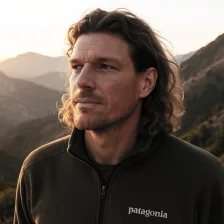
By Steven Keen
MSc candidate in Responsible Tourism Management, GSTC- and ICRT-certified.
19 min read Updated: Verified:
Most destination guides are researched. This one is inhabited: its author lives year-round in a Cretan mountain village. The general prose is the site’s usual register; the parts marked as field notes are first-person and observed, not researched.
Key Takeaways
- Crete suits soft travel because its warm season is one of Europe’s longest—an unplanned day here costs an afternoon, not the trip.
- Greek tourism is fiercely seasonal: 42% of the country’s accommodation nights fall in July and August alone, so the other ten months hold the same island with a fraction of the crowd—May, June, September, and October are the gentle window.
- Soft travel here is a question of bases, not routes: pick one or two villages, stay long enough to form habits, and let day trips stay optional.
- You need less than the industry suggests—KTEL buses and south-coast ferries genuinely work, and a gentle two-week stay runs roughly €1,000–1,500 before flights, less than a package vacation.
- A day of morning swims, old kalderimi paths, and the evening volta quietly clears the nature-time thresholds the health research measures—on an island with 54 Natura 2000 sites over ~141,000 hectares, the healthy dose and the pleasant life are the same schedule.
Why Crete Suits Soft Travel
Crete is Greece’s largest island and behaves like a small continent: calm sandy bays in the north, a mountainous spine rising past two thousand meters1 2, a south coast that still runs on boat schedules and appetite.3 The warm season is among Europe’s longest—in Heraklion the mean daily maximum sits at or above 20 °C from April through November4—which is what makes unplanned travel realistic here: a spoiled plan costs an afternoon, not the trip.
The deeper reason is cultural. The four Cretan concepts introduced on the home page—philoxenia (hospitality to the stranger), kefi (unscheduled joy), paréa (company without a clock), and siga-siga (“slowly, slowly”)—are not tourist-board inventions. They are how the island actually runs, especially away from the resort strips. A traveler who arrives without an itinerary is not an anomaly here; they are legible.
Field note · Steven Keen
The kafenion in my village opens when the owner arrives and closes when the last conversation ends. In my years here I have never seen anyone ask for the wifi password twice—not because it’s refused, but because by the second morning you understand that the point of the place is the table, the small coffee, and the man opposite you who has opinions about your olive tree. That is the infrastructure of soft travel, and no hotel can build it.
Seasons: When the Island Is Gentle
Greek tourism is among the most seasonally compressed in Europe: 42% of all nights spent in the country’s tourist accommodation fall in July and August alone.5 For the soft traveler that number is not a warning but a map—it means the other ten months hold the same island with a fraction of the people, and that the difference between a hard trip and a gentle one here is, to an unusual degree, a calendar decision.
Spring (March–May)
The island’s great show: wildflowers everywhere, green hills that summer visitors never see, herb-gathering walks, empty beaches at temperatures made for walking rather than lying down.
Autumn (September–November)
Warm sea, grape and olive harvests, and the rakokazana—the communal raki distillations that are half agriculture, half festival. The island exhales; prices follow.
Summer (June–August)
Beautiful and busy. Soft travel survives summer by moving inland and south, keeping mornings for the sea and afternoons for shade—the siesta is not a quaint custom here, it is engineering.
Winter (December–February)
The island belongs to itself. Many coastal businesses close; villages do not. For long stays, journaling weeks, and radical quiet—with rain as part of the deal.
Field note · Steven Keen
November is my private argument for soft travel. The last charter flights leave, the light turns long and low, and the mountain villages fill their kafenions again with people who have time. The first olive oil of the year arrives green and peppery, and everyone insists theirs is better than their neighbor’s. It is.
Getting There Slowly: The Ferry as Decompression Chamber
Soft travel begins before arrival, and Crete offers a choice most destinations no longer can: you can fly into the middle of the island’s busiest hour—or you can take the overnight ferry from Piraeus and let the trip begin instead of merely start. The slow-travel literature has always insisted the journey is part of the experience rather than a cost to be minimized,6 and the Cretan ferry is that principle made steel: nine dark hours of open water7, a deck, a slow dinner, sleep to engine hum, and an arrival at first light into a harbor instead of a terminal. In my experience the boat does the first two days’ decompression for you—an impression, offered as one, not a measured effect.
Whichever way you arrive, the soft method makes one non-negotiable claim on the calendar: the first forty-eight hours are for arriving, not achieving. No car pickup sprint, no first-morning excursion, nothing booked. Find the coffee, find the bakery, find the water, sleep badly the first night and well the second—this is not wasted time but the trip’s foundation being poured. Unwinding has its own tempo—every host on this island knows it on sight—and a traveler who spends days one and two performing efficiency arrives at day three needing to start over.
One boundary note, kept deliberately: this page recommends the ferry for what it does to you—the pace, the threshold, the sleep. What transport choices do for the island is a different ledger belonging to a different site: the honest carbon arithmetic lives at regenerativetravel.org, and this guide will not blur the two by dressing a comfort argument in an emissions costume.
A Seven-Day Rhythm (Not an Itinerary)
A soft week has a shape the way a piece of music has one—not a schedule, a rhythm. Here is one honest week from a village base, offered as sheet music to improvise over. Days one and two are the arrival protocol above: the geography of the daily necessities, the first paths, the discovery of where the light goes in the evening. Day three is the first real outing—one cove or one village over, chosen at breakfast—and, usually, the first unplanned conversation, because by the third day the kafenion has decided you are staying long enough to be worth talking to.
Day four or five is market day somewhere within reach, which is the island’s weekly festival of produce, gossip, and the season’s exact state—go with a bag and no list. One of these middle days should also be the nothing day: the day whose only entry is the beach below the house or the chair under the vine, protected deliberately, because the itchy restlessness it triggers around mid-afternoon is precisely the habit the nothing day is there to outlast. By day six something will have suggested itself—a festival, an invitation, a path someone mentioned—and following it beats anything that could have been booked. Day seven repeats whatever became a habit, because the repetition is the point: the second visit to the same taverna is a different experience from the first, and the fifth is a relationship.
Notice what the week quietly accumulated: hours of walking and sea, long outdoor meals, daily unhurried nature time far past the thresholds the health literature associates with measurable benefit8—each outing sitting comfortably in the duration window where the measured stress-reduction runs most efficiently.9 Nobody was optimizing anything. That is the design: on this island, the healthy dose and the pleasant life are the same schedule.
| Day | Outing | Minutes (illustrative) |
|---|---|---|
| Day 1 | First coastal path | 26 |
| Day 1 | Evening volta | 20 |
| Day 2 | Morning swim | 25 |
| Day 2 | Kalderimi walk | 30 |
| Day 2 | Evening volta | 22 |
| Day 3 | Morning swim | 26 |
| Day 3 | Walk to the cove | 28 |
| Day 4 | Market walk | 30 |
| Day 4 | Long outdoor lunch | 24 |
| Day 5 | Morning swim | 22 |
| Day 5 | Chair under the vine | 22 |
| Day 6 | Hill path | 25 |
| Day 6 | Evening festival volta | 26 |
| Day 7 | Farewell morning swim | 24 |
| Week total | What you got | 350 (illustrative); threshold 120 (White 2019); per-outing window 20–30 (Hunter 2019); What you optimized 0 |
Embed this graphic
Free to embed. The embed keeps a visible credit linking back to this page.
Field note · Steven Keen
The visitors who struggle here are never the lazy ones—they are the competent ones, the ones who arrive with the island as a project. I watch them fight the first nothing day like an addiction, and I watch, usually around day five, the moment the fight ends: someone brings them a plate of figs they didn’t order, and they put the phone down, and that’s it—the island has them. Everything on this page is really just engineering toward that plate of figs.
to Be Tourists
THE FIELD GUIDE · FREE · NO EMAIL
Soft Is a Method, Not a Mood
You can’t book a slower trip—you can only choose one. Eleven evidence-based pages that turn soft travel into something you do before you arrive, not something you hope for once you’re there. From our companion site on responsible tourism.
Get the free guideWhere to Base Yourself
Soft travel on Crete is a question of bases, not routes. Pick one or two, stay long enough to develop habits, and let day trips stay optional.
Apokoronas—the green northwest
Villages like Vamos, Gavalochori, and Xirosterni, connected by old kalderimi paths; Kournas Lake; Argiroupoli’s springs. Renovated stone houses to stay in, walking between villages as the day’s plan, and Chania an easy bus away when a town day calls.
The south coast—Loutro, Sfakia, and beyond
Loutro has no road; arrival is by boat or on foot, and the pace follows from that fact. The Libyan Sea coast strings together small harbors where the ferry timetable is the only schedule anyone keeps.
The interior—Zaros and the mountain villages
Spring water, trout, monastery paths, and mornings that smell of woodsmoke and thyme. Inland Crete is where the island’s rhythm is least negotiable—which is precisely the point.
Old-town Chania or Rethymno—the gentle urban option
Venetian lanes built for getting lost, harbor evenings, the volta (evening stroll) as a civic institution. Choose rooms away from the waterfront bars; quiet is a booking criterion here.
Two Ways to Structure a Two-Week Stay
Option 1: One Base
Two weeks in one place. Day trips only when they suggest themselves. The reward is routine—a regular café, a daily path, a taverna where they start bringing “the usual.”
Option 2: Slow Sequence
Two or three bases of five to seven days—say, Apokoronas, then the south coast—moving once, westward or southward. No cross-island day tours; the transfer day is a travel day, nothing else.
Field note · Steven Keen—on costs, observed mid-season
What a gentle two-week stay costs here, from watching guests do it rather than from a brochure: a simple family-run room at €40–70 a night; eating the way the village eats—markets, tavernas without laminated menus—at €15–25 a day; a small rental car optional at roughly €150–300 for the stay, because buses and boats genuinely work if you let the timetable set the tempo. Most of the best activities—paths, coves, festivals you get pulled into—cost nothing. Call it €1,000–1,500 for two weeks before flights, which is less than a package vacation and contains, in my experience, several multiples of the actual vacation.
Tables and Markets: Eating as a Pace Practice
Nowhere is Crete’s soft infrastructure more complete than at the table, and using it well is a skill worth naming. The first move is unlearning the menu: in the places worth your two weeks, the operative question is not “what do I choose?” but “what does the kitchen have today?”—asked out loud, answered honestly, and often followed by being led into the kitchen to look. Ordering this way converts a transaction into a small collaboration, and it reliably produces the meal the laminated menu was hiding: the horta gathered that morning, the fish that actually came off a boat, the dish the grandmother only makes when the artichokes are right.
The rhythm around the food matters as much as the food. Cretan meals are built long—plates arrive when ready, nobody brings the bill until asked, and the table is rented, culturally speaking, for the evening. That length is this guide’s own observation; what is documented is the sharing beneath it. The shared table is the heart of the Mediterranean diet that UNESCO inscribed on the Representative List of the Intangible Cultural Heritage of Humanity in 2013, with Greece among the submitting states, and the inscription puts eating together at the foundation of the region’s cultural identity while naming markets as key spaces where the practice is passed on.10 The raki and the fruit that arrive unbidden at the end are not upselling; they are punctuation, the island’s way of saying the transaction ended a while ago and what remains is hospitality. Treating dinner as a two-hour event rather than a refueling stop is the single easiest soft practice to adopt here, because the entire culture is arranged to reward it. The same is true of the morning kafes: a Greek coffee is small, unhurried by design, and comes with an implicit license to sit for an hour. Take the license.
And the weekly market—the laiki—is the island’s masterclass in season-reading: what is piled high is what the land is doing right now, and shopping it with no list, for whatever looks proudest, is attention practice disguised as errands. (Where the money goes when you eat this way—the producers, the short supply chains, the village economics—is the sister ledger, kept at regenerativetravel.org. This page’s claim is narrower and just as true: eating this way feels better, immediately, to the person doing it.)
Field note · Steven Keen
The precise moment a guest becomes a regular in my village taverna is observable: it is the evening the owner stops bringing a menu and starts bringing food. Guests always describe it later as the best meal of the trip, and they are right, but not because the cooking changed—because their category did. There is no faster route to that evening than coming back twice and asking, both times, what the kitchen has.
Walking: The Island at Restoration Speed
Crete rewards walkers out of all proportion to effort, and for the soft traveler the point is never distance—it is that walking is the speed at which the island’s detail resolves and the mind’s background hum stands down. The gentle end of the spectrum is rich: the old kalderimi mule paths that still stitch the Apokoronas villages together (an hour’s shaded amble ending at a different kafenion from the one you left), the coastal paths of the south where the trail simply follows the line where land and sea negotiate, and the low gorge walks—there are dozens beyond famous Samaria—where an unhurried morning delivers geology, birdsong, and solitude in equal measure.
The walking here also comes with an unusual guarantee of quality wilderness: the island carries 54 Natura 2000 protected sites across roughly 141,000 hectares, on land and in the surrounding sea11—which for the walker translates simply: you are rarely more than a morning’s decision away from land whose stillness is institutional. Spring and autumn are the walking seasons (summer walking happens early or not at all), and the equipment list for the gentle tier is deliberately short: water, hat, and the discipline not to turn a walk into a workout. The demanding tier—the multi-day traverses, the summit thresholds, the walks designed to change someone—exists, and it belongs to the sister site’s Crete page; the boundary between a restorative walk and a transformational one is the whole difference between these two resources, and both are honest about which they sell.
The Sea, Used Softly
The industry sells the Cretan sea as an event—the beach day, the lounger, the umbrella row—and the soft method quietly reverses this: the sea works best here as a daily practice, ten unspectacular minutes at a time. The morning swim before coffee, in whatever water lies below the base, does more for the texture of a two-week stay than any famous beach reached by car, and it costs the day nothing—the whole practice fits inside the hour the light is at its kindest and the water at its stillest. Swum daily, the sea stops being scenery and becomes a routine the body starts asking for, which is the surest sign the trip’s restoration is actually compounding.
The shoulder seasons are the practice’s secret: the water holds its summer warmth deep into autumn—islanders swim well into November—and an October sea with no one in it is a different element from an August one with hundreds. Geometry matters too: the organized beaches sell infrastructure (loungers, tavernas, safety flags—genuinely useful for families), while the unorganized coves sell the older product—a towel on a rock, shade you find rather than rent, and the particular quality of attention that arrives when nothing is provided. A soft two-week stay wants mostly the second with occasional use of the first. And one honesty the brochures skip: the island has wind days, when the sea means it—the soft response is the local one, which is to do something else that day without treating it as a loss. The island sets terms; accepting them is the practice.
The Gentle Practicalities
Connectivity: village wifi is generally fine and mobile coverage is broad, with gaps in the gorges and the deep south—and the soft reading of those gaps is that the island has thoughtfully provided places where the argument with the phone is settled by geography. Choose accommodation with wifi and days without it. Language: English works everywhere tourism reaches; fifty words of Greek work somewhere better. The kalimera at the bakery and the efcharisto with eye contact are not linguistics—they are the entry fee to the island’s parallel economy of warmth, and the exchange rate is spectacular. Money: cards are widely accepted, but the village runs on cash the way it runs on relationships—small notes for the kafenion, the laiki, the honesty-box eggs. The cash economy is slower per transaction, which on this site counts as a feature.
Time: shops close for the afternoon, Sundays are quiet, August has feast days when everything stops, and none of this is an inconvenience to route around—it is the island’s pace-setting infrastructure, doing for the visitor what no meditation app has managed. Plan the day around the closures and the day acquires the very shape the practice section prescribes. And when booking, audit for quiet: the room over the beach bar and the lane behind the harbor’s nightlife undo a soft trip nightly. Ask about the room’s soundscape as seriously as its view—and accept that in a real village the soundscape includes roosters, church bells, and the neighbor’s mopeds, which are not noise; they are the place, audibly alive. The distinction matters: the first kind of sound is somebody selling something; the second is somewhere existing. Only one of them wears off.
And if you would rather have this register designed for you end to end: the author’s own social enterprise on the island, CRETAN®—disclosed on the About page and profiled in the case study below—is built around exactly it. The guide above works with or without anyone’s help.
The Honest Part: Crowds, and Being Somewhere Else
Crete has overtouristed corners, and pretending otherwise would break this site’s rules. Balos, Elafonisi, and Preveli in high season are line management with a view; the Samaria Gorge is magnificent and processed. A soft traveler’s tactic is not to boycott the famous places but to visit them the way locals do—early, late, or out of season—and to remember that the island has hundreds of unfamous coves and gorges whose only shortcoming is the absence of a hashtag.
Choosing the quiet cove over the famous one is also, conveniently, what takes pressure off the famous one—the point where soft travel and responsible tourism become the same behavior. And quiet, it turns out, is not equally available to everyone: for wheelchair users, Crete’s honest accessibility picture—including the Seatrac-equipped beaches—is documented in detail in the accessible Crete guide, where doorways are measured on the island rather than copied from listings. For what a visit can give back to the island’s landscape, see regenerative tourism on Crete.
A Gentle Day, Assembled
- Wake with the light; coffee where the locals take theirs
- One thing in the morning—a path, a market, a cove—chosen at breakfast, not before
- Long lunch, real siesta
- The evening volta, dinner late and unhurried
- No photographs required of any of it
A day shaped like this quietly clears the evidence-backed thresholds without ever mentioning them: the morning path and the evening volta alone exceed the roughly two weekly hours of nature time associated with good health and well-being,8 and each unhurried outdoor half hour sits exactly in the window where the measured stress-reduction is most efficient.9 The science behind these numbers—and the rest of the case for traveling this way—is laid out in full in what the evidence on soft travel actually shows.
Letters from inside the question
The Other Side of Travel
The tourism industry is loud, crowded, and always trying to sell you something. These letters are the drive into the hills. A monthly dispatch exploring how to travel differently.
Read it before you decideCase Study: CRETAN®
This guide describes a register you can arrange for yourself—fewer places, held longer, days shaped by the island’s pace instead of an itinerary. It can also be arranged for you. CRETAN®—the working model this guide’s author founded, disclosed here as its single case study—is built to hand a traveler that register end to end: small groups moving mostly on foot, unhurried, through the inland Crete the resort strips never reach.
The pace it keeps
- Groups of eight, not coachloads—small enough that the day can bend to the place instead of the schedule.
- Days spent mostly on foot, at walking speed, steered toward quiet inland trails rather than the crowded coast.
- Fewer moves, held longer—the one-base week this guide argues for, arranged rather than assembled.
The local way, not a theme
- Guides who live in the villages you walk through—all Cretan, trained, and paid above the living wage. That is a commitment, not an audited figure: the written pay commitment and the pricing breakdown behind it are not yet published.
- Meals and supplies from mountain tavernas, wineries, and farms, not intermediaries—the table is the point, and it is a real one.
- The island’s own habits—philoxenia, paréa, siga-siga—as the actual texture of the days, not a brochure motif.
Open to more travelers, at the same pace
- Wheelchair-accessible on the same gorge and mountain trails, using specialized, all-terrain equipment.
- Same trails, same group, same pace, same price—no accessibility surcharge and no separate “special” program.
What it can show you today—and what it can’t yet
Much of the above is checkable on the ground: you can meet the guide who lives down the road, sit at the taverna that keeps the money, and feel whether the week actually moves at the pace it claims. What CRETAN® cannot yet hand you is the paperwork that would put a number on it—a transparent pricing breakdown, an annual sustainability report, and post-tour guest surveys are targets the model is built toward, not results it can publish yet. And one thing no operator can promise: softness is a state, not a service—CRETAN® can set the pace and clear the noise, but whether a given traveler actually settles is theirs, and this guide says so rather than selling the feeling.
That is what CRETAN® is for: to take soft travel—the register this guide describes, gentle days held at the nervous system’s speed—off the page and onto a real week on Crete, for travelers who would rather arrive into it than assemble it themselves. The guide above works with or without anyone’s help.
Frequently Asked Questions
What is the best month for a soft trip to Crete?
Is Crete too hot and crowded for soft travel in summer?
Do I need a rental car?
How long should a soft trip to Crete be?
Is Crete a good first destination for trying soft travel?
Steven spent a decade making documentaries in the places tourism forgets—with his work held in the archives of the UN’s International Labour Organization—before he went to live in one: a tiny mountain village on Crete. He is completing an MSc in Responsible Tourism Management, GSTC- & ICRT-certified, and the founder of CRETAN®, which serves as a case study. Read how these pages are edited.
The village routines, prices, and season notes on this page come from the author’s daily life on the island; they are marked as field notes, not presented as statistics.
Where to Go from Here
What Is Soft Travel?
The foundation under this field guide: the definition, its German origins, the recovery evidence, and six practices in full.
The Evidence for Soft Travel
Every claim on this site traced back to its studies—what the science supports, and the fade-out it does not hide.
Sanfter Tourismus: The Alpine Policy Model
In the Alps, “gentle tourism” is a signed treaty and a car-free village network: the Alpine Convention, Alpine Pearls, Werfenweng—and where the car stops.
Explore Our Companion Resources
- responsibletourism.com The same island’s impact ledger: keeping your money local, shoulder-season timing, Natura 2000 wildlife, and the two journeys of €100. (opens in new tab)
- ethicaltourism.com How to be a guest, not an audience on Crete: living culture versus cultural theater, panigiria, and the village calendar. (opens in new tab)
- inclusivetourism.com The same island for travelers with access needs: Seatrac beaches, step-free Knossos routes, and the transport gap, verified honestly. (opens in new tab)
References
- Psiloritis UNESCO Global Geopark — UNESCO, International Geoscience and Geoparks Programme—designated 2015; 127,200 ha; the Ida (Psiloritis) range carries Crete’s highest peak. https://www.unesco.org/en/iggp/psiloritis-unesco-global-geopark (accessed August 5, 2026). ↩
- Gorge of Samaria Biosphere Reserve — UNESCO, Man and the Biosphere Programme—year of nomination 1981; “Altitudes range from sea level to 2,134 metres”; 53,932 ha terrestrial and 4,552 ha marine. https://www.unesco.org/en/mab/gorge-samaria (accessed August 5, 2026). ↩
- ANENDYK Seaways—south Crete ferries — ANENDYK Seaways S.A., official routes and timetables for Sfakia, Loutro, Agia Roumeli, Sougia, Palaiochora and Gavdos—the roadless south coast where the boat is the road. https://anendyk.gr/ (accessed August 5, 2026). ↩
- Herakleion—climatological normals — World Meteorological Organization, World Weather Information Service (normals supplied by the Hellenic National Meteorological Service): mean daily maximum 20.0 °C in April, 28.7 °C in July, and back to 20.0 °C in November. https://worldweather.wmo.int/en/city.html?cityId=2278 (accessed August 5, 2026). ↩
- Seasonality in the tourist accommodation sector — Eurostat, Statistics Explained (data for 2025). https://ec.europa.eu/eurostat/statistics-explained/index.php?title=Seasonality_in_the_tourist_accommodation_sector (accessed August 5, 2026). 42% of nights spent in Greek tourist accommodation fall in July and August alone. ↩
- Slow Travel and Tourism — Dickinson, J. & Lumsdon, L. Earthscan, 2010. ISBN 9781849711135. https://openlibrary.org/isbn/9781849711135 (accessed August 5, 2026). The founding book-length treatment of travel in which the journey itself is part of the experience. ↩
- Piraeus–Heraklion–Piraeus ferry timetable — Minoan Lines, published all-year schedule: departure 21:00, arrival 06:30. https://www.minoan.it/en/routes-fares-timetable-minoan-lines/timetable-ferry-piraeus-heraklion (accessed August 5, 2026). ↩
- Spending at least 120 minutes a week in nature is associated with good health and wellbeing — White, M. P. et al. Scientific Reports 9:7730, 2019. https://www.nature.com/articles/s41598-019-44097-3 (accessed August 5, 2026). ↩
- Urban Nature Experiences Reduce Stress in the Context of Daily Life Based on Salivary Biomarkers — Hunter, M. R., Gillespie, B. W. & Chen, S. Y.-P. Frontiers in Psychology 10:722, 2019. https://www.frontiersin.org/journals/psychology/articles/10.3389/fpsyg.2019.00722/full (accessed August 5, 2026). ↩
- Mediterranean diet (Representative List of the Intangible Cultural Heritage of Humanity) — UNESCO Intangible Cultural Heritage, inscribed 2013 (8.COM); Greece among the submitting States. https://ich.unesco.org/en/RL/mediterranean-diet-00884 (accessed August 5, 2026). The inscription places the shared meal at the center of Mediterranean cultural identity and names markets as key spaces where the practice is transmitted. ↩
- About Natura 2000 on Crete — Region of Crete, official Natura 2000 portal. https://natura2000.crete.gov.gr/?id=50 (accessed August 5, 2026). 54 Natura 2000 sites on Crete covering about 141,318 hectares. ↩
Further Reading
- Slow Travel and Tourism
Janet Dickinson and Les Lumsdon · 2010 · Earthscan / Routledge
- Management Unit of Samaria National Park and Protected Areas of Western Crete (official park site / tickets)
O.FY.PE.K.A. / NECCA (Organization for Natural Environment and Climate Change) · 2026 · Hellenic Republic—NECCA
- The E4 in Crete (walking the European long-distance path across the island)
Discover... on Foot · n.d. · Discover... on Foot
Our Editorial Standards
This is an independent resource, written and maintained by Steven Keen—a responsible tourism practitioner based on Crete, completing an MSc in Responsible Tourism Management and certified by the GSTC and ICRT. Every statistic is cited to its primary source, every page carries an honest last-updated date, and where a figure cannot be verified, we flag it—rather than guess. Seasonal claims are re-checked on the island as the seasons turn, and every reference carries the date it was last accessed. We disclose our connection to CRETAN®, which serves as a documented case study. Nothing here is sponsored, and the site sells nothing and takes no bookings. Claims that expire carry a review date, and this site cannot be published after that date passes until the claim has been re-read. Soft travel is an emerging concept, not an established academic field, and we say so plainly rather than inflate it. Read our full editorial standards.